PIR Motion Detector 4 Steps Circuit Diagram How to Use a PIR Motion Sensor With Arduino : I ordered a PIR motion sensor recently and thought it would be easy to set up. The sensitivity controls the distance the sensor will detect motion. This part is really just preference. I am fine with having the sensitivity to be in the middle, but in the future I may mess with it more. Step 3
2) PIR Motion Detector and Security Alarm Circuit. The following PIR motion sensor circuit can be easily built using the following basic set up and applied as a anti-theft alarm circuit. As the figure shows, the PIR only requires a single 1K resistor, transistor and a relay to be configured externally. In this article, We will learn how can we make a Motion Detection System using Arduino. When the PIR Sensor will detect any motion, it will show that on the Serial Monitor and the buzzer will start. Components Required. Arduino UNO -> A microcontroller board based on the ATmega328P; PIR Sensor -> Which detects the motion The PIR sensor is adjustable by hand if you look at the back. I needed to do some minor tweaks to get the sensor more sensitive before I pushed too far on the code. The first part is changing the Trigger Mode from low to high. It is a tiny jumper at the top right-hand side of the sensor with L and H labeled (refer to the PIR diagram).

How to Use a PIR Sensor with Arduino for Motion Detection Circuit Diagram
Unlock the power of motion detection with Arduino! In this video, we'll show you how to use a Passive Infrared (PIR) sensor with Arduino to detect motion and Along with the pyroelectic sensor is a bunch of supporting circuitry, resistors and capacitors. It seems that most small hobbyist sensors use the BISS0001 ("Micro Power PIR Motion Detector IC"), undoubtedly a very inexpensive chip. This chip takes the output of the sensor and does some minor processing on it to emit a digital output pulse from

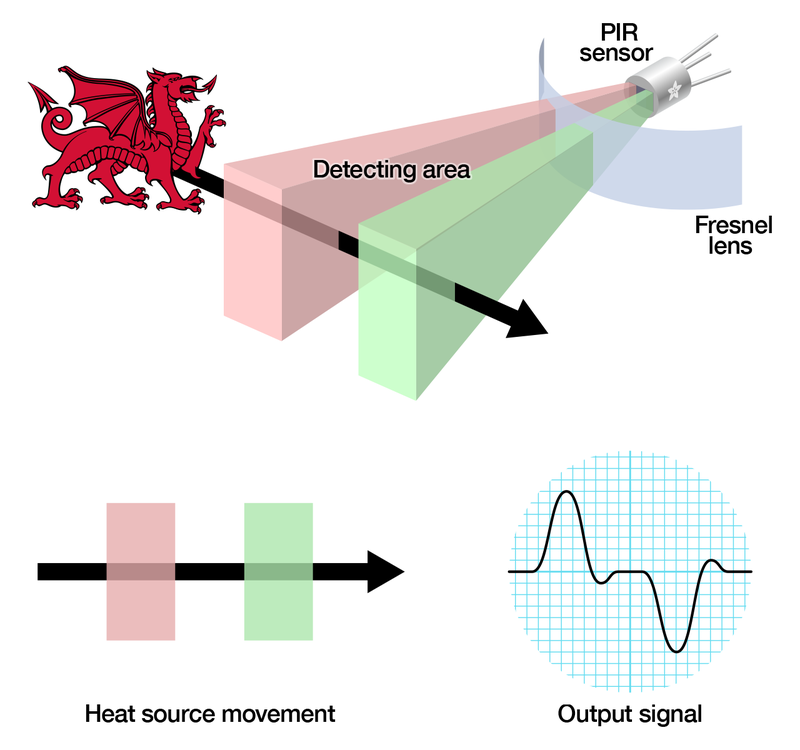
PIR sensors like the HC-SR501 detect motion by measuring changes in infrared radiation across the sensor. The sensor element actually has two separate sensing elements: The two sensing elements allow the sensor to differentiate between static sources of IR light like sunlight, and moving sources like humans and animals. PIR sensors operate using a simple two-pin logic. When the sensor detects motion, it sends a HIGH signal (3.3V or 5V, depending on the sensor) to the output pin. When there is no motion, the sensor outputs a LOW signal (0V). This makes it easy to integrate with Arduino to trigger actions like turning on LEDs or activating alarms.